When your calendar is full, a workout that needs an hour can become a workout that never happens. Thirty minutes gives you room for a useful strength session, a brisk walk or some structured cardio without taking over your day.
The trick is to give each session a clear job. You do not need to squeeze lifting, cardio and every exercise you know into the same half-hour.
What Can a 30-Minute Workout Actually Accomplish?
Half an hour is enough to train several major muscle groups or accumulate a useful amount of aerobic activity. What matters is what you do during that time and how the sessions add up across your week.
The CDC’s adult physical activity guidelines have two separate parts:
- Aerobic activity: At least 150 minutes of moderate activity, 75 minutes of vigorous activity, or an equivalent combination each week.
- Muscle strengthening: At least two days each week, working all the major muscle groups.
Five 30-minute brisk walks can cover the moderate aerobic target. Replacing two of those walks with lifting sessions leaves 90 aerobic minutes, so you would need additional activity to reach 150.
You can still benefit before reaching those amounts. The World Health Organization emphasizes that all physical activity counts and that some activity is better than none.
A 30-Minute Strength Workout for a Home or Garage Gym
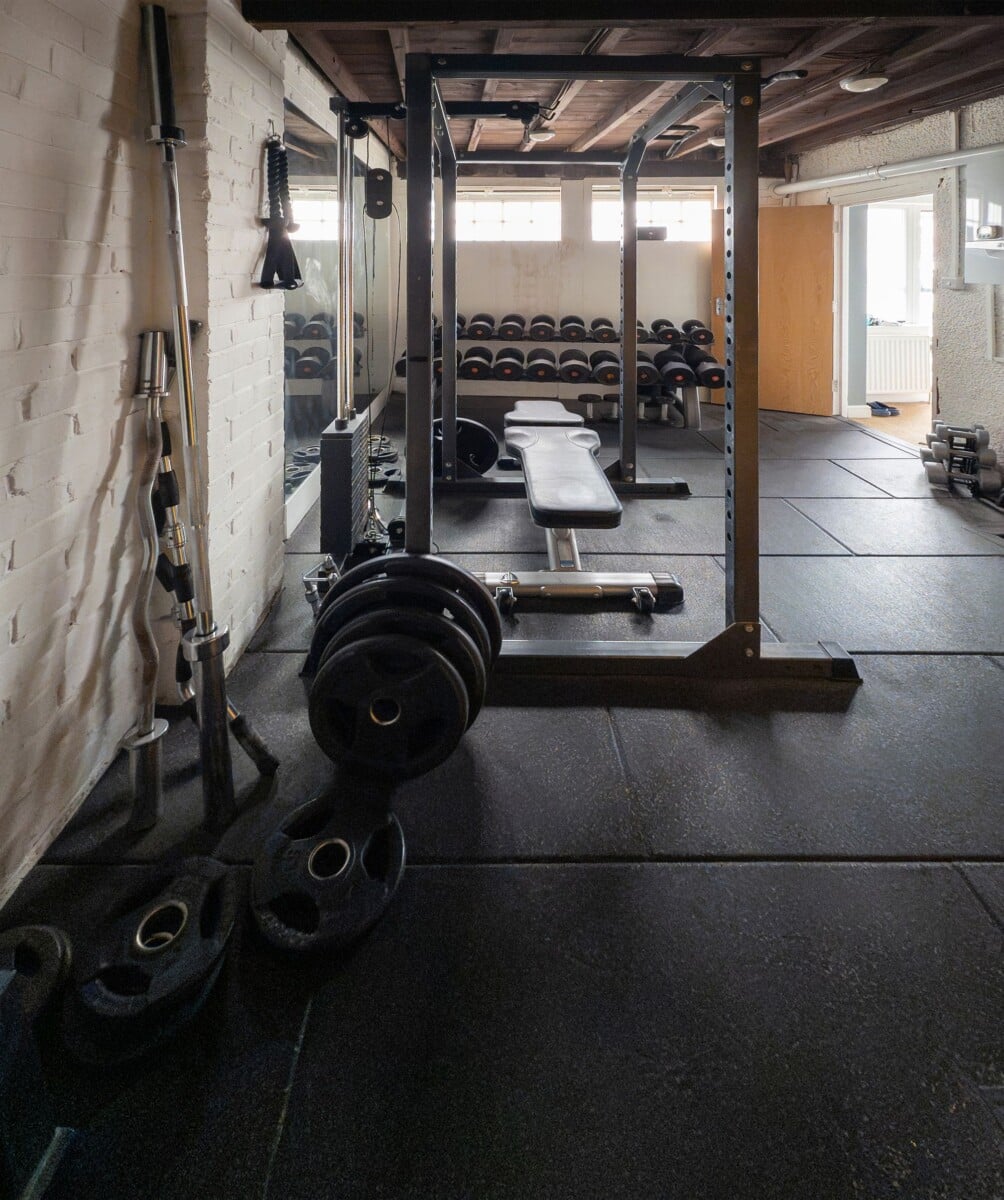
You do not need a long list of sets to make a start. An overview in Sports Medicine identified single-set resistance training as one of the better-supported minimal-dose approaches for improving strength, particularly in people who are not currently lifting.
The review describes programs using one set of several exercises, commonly seven to ten, performed two or three times a week. That supports keeping the session manageable. It does not establish one exact circuit as the best workout for everyone.
How to Divide Your Half-Hour
- First 5 minutes: Easy movement and lighter practice repetitions of the exercises you plan to do.
- Next 20 minutes: Work through the exercises below, taking the rest you need.
- Final 5 minutes: Ease down, record your weights and repetitions, and put equipment away.
This is a suggested time budget. If you need more practice or rest, shorten the exercise list rather than rushing your repetitions.
The Full-Body Circuit
Perform one working set of each exercise. For movements done one side at a time, complete both sides before moving on.
| Exercise | Starting target | How to adjust it |
|---|---|---|
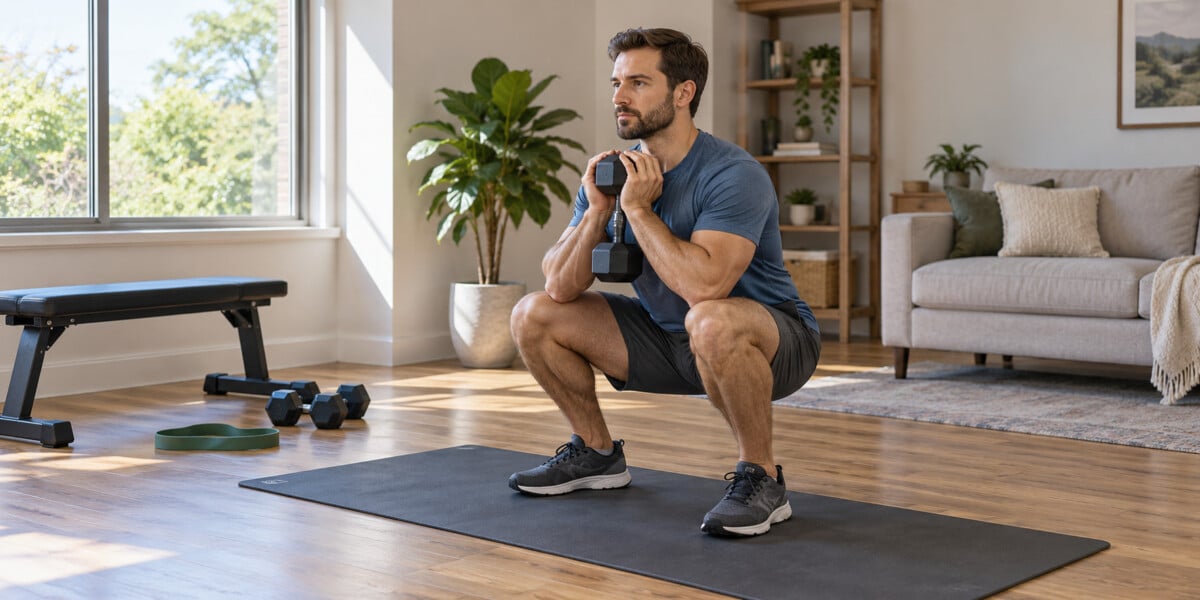
| Goblet squat | 10–15 repetitions | Use a lighter weight or a controlled sit-to-stand if needed. |
| Push-up | 6–15 repetitions | Place your hands on a stable, elevated surface to make it easier. |
| One-arm dumbbell row | 10–12 repetitions per side | Support your free hand on a stable bench. |
| Romanian deadlift | 10–12 repetitions | Practice the hip hinge without weight before adding resistance. |
| Overhead press | 8–12 repetitions | Use a manageable weight and a comfortable range of motion. |
| Reverse lunge | 8–10 repetitions per leg | Use a stable support for balance or try a supported split squat. |
| Glute bridge | 12–15 repetitions | Start with body weight before adding resistance. |
| Plank | A short hold with controlled breathing | Elevate your hands or shorten the hold when your position starts to change. |
As a practical starting point, choose resistance that leaves you feeling you could complete another two or three controlled repetitions. Beginners can start easier while learning the movements. You do not need to reach failure or chase the longest possible plank.
Rest until you can perform the next exercise with control. Around 45–90 seconds may suit some sets, but take longer when needed. Stop an exercise if it causes pain.
How to Keep Making Progress
Write down the weight and repetitions you complete. When the top of a repetition range becomes comfortable with consistent technique, increase the resistance by a small amount and build up again.
If the circuit becomes easy and you have spare time, add a second set to one or two exercises. You can also alternate which movements receive that extra attention across sessions.
Adjustable dumbbells cover most of this list. Our home gym essentials guide can help you prioritize equipment, while our guide to comparing adjustable kettlebell weights and designs covers another option for smaller spaces.
Choose Cardio You Can Repeat Consistently
You do not have to make every short workout intense. Pick an activity you enjoy enough to do regularly, then choose a pace that suits your current fitness.
Brisk Walking or Cycling
Walking is an easy option to fit around a busy day. You can use a lunch break, part of a commute or a familiar route near home.
The CDC’s talk test offers a useful intensity check: at a moderate effort, you can talk but not sing. During vigorous activity, you generally cannot say more than a few words without pausing for breath.
Count the minutes you actually spend at the relevant intensity. If your 30-minute outing includes five easy minutes at each end and 20 brisk minutes in the middle, that gives you 20 moderate aerobic minutes.
A 30-Minute Interval Option
If you already tolerate moderate exercise comfortably and want to try intervals, use a bike, rower or another activity you can control easily. Start with a manageable effort rather than an all-out sprint.
- Warm up for 5 minutes at an easy pace, gradually increasing your effort.
- Complete 10 rounds of 30 seconds at a harder, controlled effort followed by 90 seconds easy. This takes 20 minutes.
- Cool down for 5 minutes at an easy pace.
This is a suggested session, not a requirement. Start with fewer rounds if needed, and build gradually. If you are new to exercise, steady walking or cycling may be a more comfortable place to begin.
An air bike is one equipment option. Our roundup of the best air bikes for home gym owners compares the available designs.
Do not count the entire interval session as vigorous exercise. Ten 30-second harder efforts add up to five minutes. Recovery periods only contribute to your aerobic total at the intensity you actually maintain.
A Weekly Schedule That Adds Up Honestly
Start by protecting two strength sessions, preferably on nonconsecutive days. Then decide how much aerobic activity you can fit into dedicated sessions and shorter breaks.
The examples below assume each cardio session includes 30 minutes at a moderate intensity. Easy warm-up and cool-down time may require a little extra time.
| Dedicated workout slots | Suggested split | Moderate aerobic minutes | Additional moderate activity to reach 150 minutes |
|---|---|---|---|
| 3 per week | 2 strength sessions and 1 cardio session | 30 | 120 minutes |
| 4 per week | 2 strength sessions and 2 cardio sessions | 60 | 90 minutes |
| 5 per week | 2 strength sessions and 3 cardio sessions | 90 | 60 minutes |
For example, two strength sessions, three 30-minute brisk walks and six additional 10-minute brisk walks would provide two strength days and 150 moderate aerobic minutes.
Those shorter walks can happen during lunch, after dinner or while waiting for a child’s activity to finish. They do not need to become another trip to the gym.
Vigorous activity can also contribute: one vigorous minute counts roughly like two moderate minutes toward the aerobic target. Keep strength work in the plan, and count exercise time according to what you actually do.
What to Do When You Have Less Than 30 Minutes
Use the time available without trying to compress a full workout into it.
- Have 5 minutes? Take a short walk or practice a few familiar bodyweight movements.
- Have 10 minutes? Walk briskly or complete a few controlled strength exercises with appropriate rest.
- Have 15 minutes? Warm up, then choose a small group of familiar movements, such as a squat, push-up and row.
Research also suggests that movement outside formal workouts deserves attention. A Nature Medicine study of 25,241 adults who reported no leisure-time exercise found that brief bursts of vigorous everyday activity were associated with lower mortality over an average 6.9 years of follow-up.
The participants’ average age was about 62, and the study was observational. It cannot prove that adding a few bursts causes a particular reduction in risk, or that brief activity replaces a balanced exercise routine.
Short resistance-training “snacks” are another option discussed in the minimal-dose review. Treat them as a way to keep moving on difficult days, using familiar exercises you can perform well, rather than as a reason to rush through heavy lifts.
Frequently Asked Questions
Can You Split 30 Minutes Into Smaller Chunks?
Yes. Three 10-minute brisk walks can contribute the same amount of moderate aerobic time as one 30-minute brisk walk. The activity does not have to happen in one uninterrupted session.
Is One Strength Session a Week Worth Doing?
Yes. The minimal-dose review found support for once-weekly resistance training as a way to improve strength compared with doing none. The adult guideline remains at least two strengthening days each week, so add a second session when you can.
Is 30 Minutes Enough to Build Muscle?
It can be, depending on your training experience, exercise selection, effort and progression. A short session can provide useful resistance training, but its duration alone does not guarantee muscle growth. As you progress, you may need more challenging resistance or additional sets.
Does a Strength Circuit Count as Cardio?
Do not automatically count every lifting minute toward your aerobic target. Some circuits may also provide moderate or vigorous aerobic activity, but rest periods and brief sets make the total harder to judge. Track your strength sessions and aerobic minutes separately unless the activity genuinely meets both purposes.
Do You Need to Exercise Longer Eventually?
You can gain additional health benefits by exceeding the minimum activity targets. First, build a routine you can repeat. Add time, resistance or sets gradually when your schedule and recovery allow.