A plank looks simple, but if you are timing yourself for the first time, the number on the clock only means something when your form holds. New fitness guidance published November 1, 2026 lays out practical beginner plank goals running from 10 seconds up to 60 seconds, and it stresses that none of them is an official standard.
Here is what the targets are, what college research says about typical hold times, how to test fairly, and when to stop.
What Is a Good Plank Time for Beginners?
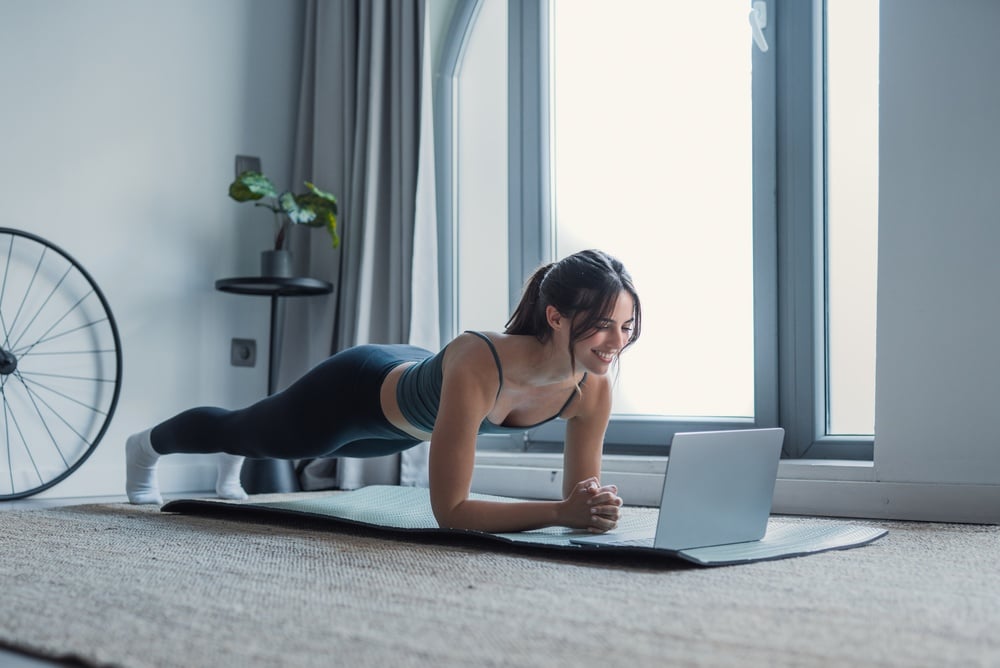
The guidance describes a standard forearm plank: elbows under shoulders, weight on forearms and toes, and head, trunk and legs in one line. It sets out a ladder of goals for beginners:
- 10 to 20 seconds: a stable starting point with steady breathing.
- 20 to 30 seconds: the same body position from start to finish.
- 30 to 45 seconds: repeated controlled holds across several sets.
- 45 to 60 seconds: form maintained without straining or holding your breath.
If you cannot manage a forearm plank for 10 seconds, the guidance suggests starting with your knees on the floor or with your forearms on a stable raised surface.
How Long Do College-Aged Adults Hold a Plank?
Hold times in research run well above beginner goals. A 2014 study of 471 college-aged students used a forearm plank held to volitional or technique failure. Men averaged 124 seconds and women 83 seconds, while athletes averaged 123 seconds and non-athletes 83 seconds.
People who were active more than three times a week held longer, with the biggest effect above five sessions a week. Tests that ended because of abdominal fatigue were the shortest. The authors say more research is needed before the results are applied to other populations, so treat them as a reference point for young adults and not a pass mark.
How To Test Your Plank Fairly
Use a flat surface and the same setup every time. Tighten your abdominals and glutes gently before starting the timer, keep your neck relaxed with your eyes on the floor a short distance ahead, and breathe normally.
End the test when you can no longer hold the position, not when you reach a target time. Compare only results from the same plank version, surface and form standard.
When Should You Stop a Plank Test?
Stop the clock when your hips drop or rise, your lower back arches, your shoulders shift away from over your elbows or your body rotates. Holding your breath is another cue to stop. Sharp pain means ending the test, and persistent back or joint pain calls for a qualified health professional.
What Does a Four-Week Plank Progression Look Like?
The example plan uses three timed sets, with rest between them, and builds in small steps:
- Week 1: 10 to 15 seconds per set.
- Week 2: 15 to 20 seconds per set.
- Week 3: 20 to 25 seconds per set.
- Week 4: 25 to 30 seconds per set.
The guidance calls these examples and not a guaranteed pace, and you do not need to move up every week.
If you are building a core routine at home, our look at how long beginners should hold a wall sit covers another timed isometric test, and the Rep Fitness Ab Support Mat 2.0 is one option for core training equipment.
Frequently Asked Questions
Is 30 Seconds a Good Plank for a Beginner?
Yes. A 30-second forearm plank with steady form sits in the early goal range of 20 to 30 seconds, and the next target is 30 to 45 seconds.
What Counts as a Plank Hold?
Only the time you keep the same position counts. Once your hips sag, your back arches or your weight shifts, the hold has changed and the timer should stop.