
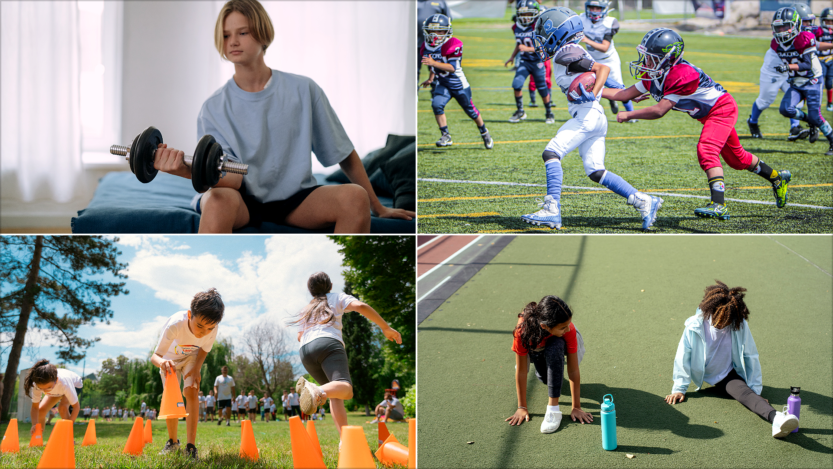
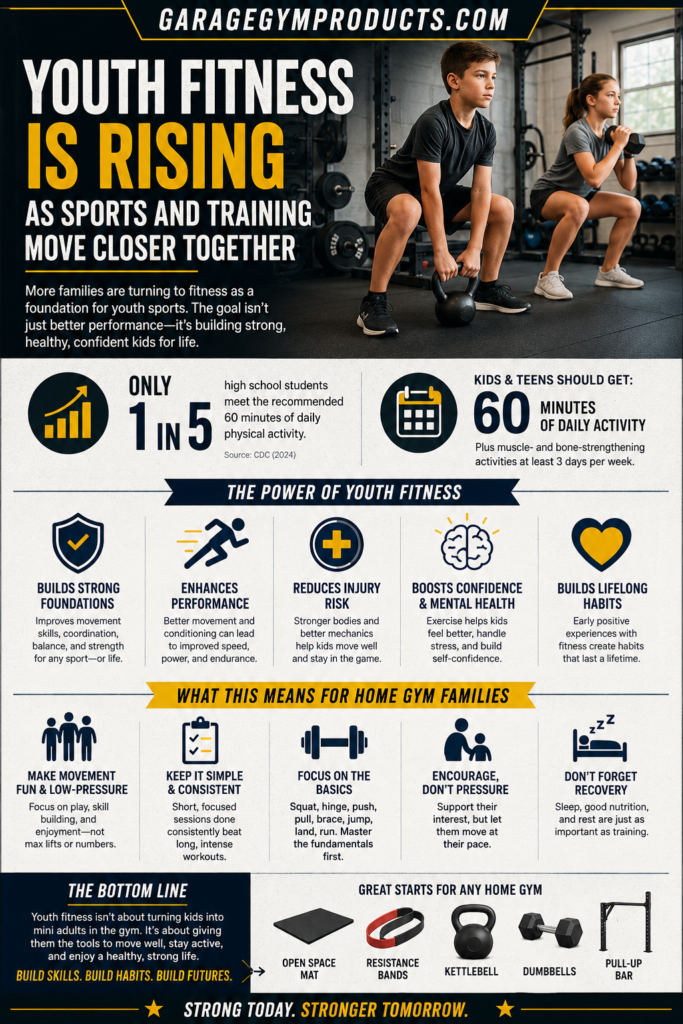
Youth fitness is getting more attention as traditional youth sports and structured training begin to overlap. The shift matters for parents, coaches, gym owners, and trainers because it changes how young athletes are introduced to exercise, conditioning, recovery, and long-term healthy habits. It also arrives at a time when many kids are not moving enough: current U.S. activity benchmarks call for children and teens to get at least 60 minutes of moderate to vigorous movement every day, with muscle- and bone-strengthening work built in at least three days per week, yet only about one in five high school students reports hitting that daily activity mark.
The core idea is simple: kids have always played sports, but more families are now looking at fitness as a support system for youth athletics, not just as something adults do after work. That creates business opportunities for gyms and training brands, but it also raises practical questions about safety, cost, coaching quality, and how much structure young athletes actually need. The smartest version of this trend treats training, recovery, and nutrition as connected pieces rather than piling more stress on a child who is already juggling school, practices, games, and screens.
For the home gym crowd, this trend is worth watching. It does not mean every garage needs to become a miniature performance center, but it does suggest that more families are thinking about movement skills, strength basics, and conditioning earlier than before. For parents who lift, run, ride, or train at home, the practical question is not whether kids should copy adult workouts. It is how to create a safe, low-pressure environment where movement feels normal and skill-building comes before load, intensity, or performance bragging.
Youth Sports Are Becoming A Fitness Pipeline
Youth sports and fitness have historically lived in different lanes. A child might play soccer, basketball, baseball, gymnastics, or track, while strength training and conditioning were often treated as something for older teens or adults. That line is becoming less rigid as sports families look for ways to improve performance, reduce bad movement habits, and keep kids active outside formal practices. With millions of U.S. children participating in organized sports each year, even a modest shift toward supplemental training creates a large audience for athletic development programs.
This convergence is not the same as turning children into professional athletes before middle school. At its best, youth fitness focuses on coordination, body control, balance, mobility, age-appropriate strength, and confidence. Those qualities support almost every sport, and they also help kids who are not chasing trophies build a healthier relationship with exercise. Supervised resistance training is no longer treated as off-limits for kids when it is properly coached, progressed gradually, and kept away from max-effort ego lifting.
For gyms and coaches, the opportunity is clear. Families already spend time and money on youth activities, and many parents are open to programs that feel structured, supervised, and productive. A well-run youth fitness program can sit between play and sport-specific training, giving kids a place to learn how to move well without the pressure of a scoreboard. That middle lane is especially valuable for children who may not love competitive sports but still need strength, coordination, and regular physical activity.
The challenge is that youth fitness requires a different coaching lens than adult training. A program built for a 35-year-old chasing muscle growth or a college athlete preparing for a season cannot simply be scaled down for children. Young athletes need instruction that respects their development, attention span, recovery needs, and emotional maturity. The goal is not to produce the youngest person in the room with a barbell on their back. The goal is to build a body that can run, jump, land, throw, change direction, and recover without turning every session into a test.

GIBBON SlackBoard - GiBoard Balance Board Kids & Adults - Slackline Balance Trainer - Slack Board Core Workout Equipment Home Gym Training - Standing Desk Exercise - Yoga, Agility, Pilates & More
What This Means For Home Gym Families
Home gym owners may feel the ripple effects of this trend before they see it in commercial gyms. Parents who already train at home often want to include their kids in some way, especially when children show interest in exercise. That can be positive when the focus stays on movement quality, consistency, and fun rather than max lifts or adult-style programming. A child who learns how to hinge, squat, brace, crawl, jump, and land with control is building athletic currency that transfers well beyond one sport.
A family garage gym can be a great place to teach basic habits: warming up, learning bodyweight control, practicing safe lifting mechanics with light resistance, and understanding that recovery is part of training. The key is restraint. Kids do not need complicated splits, extreme conditioning workouts, or constant performance testing to benefit from fitness. In many cases, ten to twenty minutes of well-coached movement mixed into play is more useful than a long session that feels like adult training wearing youth-sized shoes.
For many young athletes, the most useful training is also the least flashy. Squatting with control, landing softly, crawling, jumping safely, balancing, sprinting with good mechanics, and learning how to brace can build a foundation that carries over into sports. These skills do not require a room full of equipment, and they should not feel like punishment. Cones, bands, open floor space, a soft medicine ball, light dumbbells, and a pull-up bar used appropriately can do plenty before a family starts shopping for specialized youth performance gear.
Parents should also recognize the difference between encouragement and pressure. A child who likes joining a warmup or doing a few exercises with a parent is not automatically ready for a formal training plan. The best youth fitness environments leave room for curiosity, play, and gradual progression. If a kid starts avoiding the garage because every visit turns into coaching, correction, and counting reps, the setup has drifted away from its purpose.
The Coaching Standard Has To Be Higher With Kids
The rise of youth fitness puts more responsibility on coaches and gym operators. Training children is not just adult fitness with smaller bodies. It requires patience, clear communication, and a strong understanding of age-appropriate movement. It also requires adults to understand that early gains in youth training often come from better coordination, skill, and confidence, not from the same muscle-growth mechanisms adults chase with higher-volume strength training.
Good youth coaching usually prioritizes a few basics before intensity. Those basics include:
- Technique before load, especially on strength movements and jumping drills.
- Short, focused sessions that match a child’s attention and energy level.
- Progression over pressure, with no rush to chase adult benchmarks.
- Recovery and rest, particularly for kids who already play organized sports.
- Positive coaching language that builds confidence instead of fear of failure.
This matters because the wrong approach can turn fitness into another source of stress. Young athletes already balance school, practices, competitions, and social pressure. Adding structured training can help, but only when it supports the whole child rather than piling on another performance demand. Overuse injuries are a real concern in youth sports, and repetitive sport schedules with limited rest can be a bigger problem than a carefully supervised strength session.
Personal trainers who want to work with youth clients should be careful about scope. Strength training, mobility, and conditioning can fit well when properly coached, but pain, injury, nutrition issues, and medical concerns belong with qualified healthcare professionals. Clear boundaries protect the athlete and the coach. A trainer can teach a young athlete to land with better control, but persistent knee pain, sudden weight loss, dizziness, disordered eating signs, or recurring fatigue should move the conversation beyond the gym floor.
Business Opportunity Is Real, But Trust Comes First
The business side of youth fitness is easy to understand. Parents are looking for organized activities, sports preparation is a strong motivator, and fitness facilities want programming that reaches beyond the traditional adult membership base. Youth classes, athletic development sessions, and sport-adjacent training can help gyms diversify. For facilities that already offer group training, personal training, recovery services, or nutrition coaching, youth programming can fit naturally if it is built with the right safeguards.
Still, trust is the product. Parents are unlikely to hand their children over to a program that feels careless, overly intense, or built around social media clips. A credible youth fitness offering should make its purpose obvious: safer movement, better general athleticism, confidence, and healthy habits. Claims about scholarships, elite performance, or rapid transformation should raise eyebrows, especially with younger kids who need broad development more than specialized grind.
Gyms also need to think about logistics. Youth training may require different class sizes, more supervision, clear check-in procedures, parent communication, and coaches who actually enjoy working with kids. A loud strength floor built for adults is not automatically the right environment for younger athletes. Insurance, background checks, emergency procedures, and coach education matter here, even if those details are less exciting than agility ladders and sled pushes.
This is where established children’s activity models and performance training concepts may continue to move closer together. Some families want play-based movement. Others want structured athletic development. Many need something in between. The brands and coaches that succeed will likely be the ones that can explain where their program sits on that spectrum without overpromising outcomes, much like broader membership models that combine training and recovery need to show how each piece actually helps the member.
Recovery, Nutrition, And Costs Need Adult Supervision
Youth fitness also touches recovery and nutrition, two areas where adult judgment matters. Kids who play sports and add training sessions need enough rest, food, hydration, and downtime. A child who is always sore, tired, anxious, or losing interest may not need more discipline. They may need less total load. Sleep is a major part of this conversation, since school-age children and teens often need more rest than adults realize, especially during growth spurts and heavy sports seasons.
Nutrition should stay grounded in normal healthy eating unless a qualified professional is involved. Young athletes do not need to be pushed into adult supplement culture. Protein, carbohydrates, fluids, and regular meals matter, but the conversation should remain age-appropriate and free of body-image pressure. For most kids, the basics are boring in the best way: enough total food, a mix of protein and carbohydrates around activity, regular meals, water, and a home environment that does not turn every snack into a macro debate.
Cost is another real concern. As youth sports and fitness overlap, families may face more paid options, from clinics to private training to specialized classes. Some programs can be valuable, but more spending does not automatically mean better development. Parents should look for coaching quality, safety, and fit before assuming the most expensive option is the most serious one. A great coach with simple tools can often beat a flashy facility that treats every kid like a future combine prospect.
For home gym owners, the cost question cuts both ways. A basic home setup can make casual family movement more accessible, but it should not become a reason to push formal training too early. The most useful investment may be time, supervision, and patience rather than another piece of equipment. If equipment is added, it should match the child’s size, maturity, and training purpose, not the parent’s wish list.
Youth Fitness Could Shape The Next Generation Of Gym Users
If youth fitness keeps growing, it could influence how the next generation thinks about exercise. Kids who learn that training is about skill, confidence, health, and recovery may enter adulthood with a better foundation than people who first encounter fitness through crash diets or random high-intensity workouts. That matters because adult fitness habits are often shaped early, and a positive first experience with strength training can make the gym feel useful instead of intimidating.
That would be a meaningful shift for the broader fitness industry. More adults are already building home gyms, using strength training for longevity, and treating exercise as part of a healthy lifestyle. Youth fitness connects to that same idea, but earlier. The goal should not be to create pressure-cooked young athletes. It should be to make movement normal, safe, and enjoyable, while giving kids enough variety to avoid burnout and enough rest to keep wanting to come back.
The growth of youth fitness is worth taking seriously, but not blindly. Done well, it can support youth sports, help kids move better, and give families more ways to stay active together. Done poorly, it can become another expensive, overstructured activity that misses the point. The difference will come down to coaching, expectations, and whether adults remember that kids are not just smaller adults in brighter shoes.

