
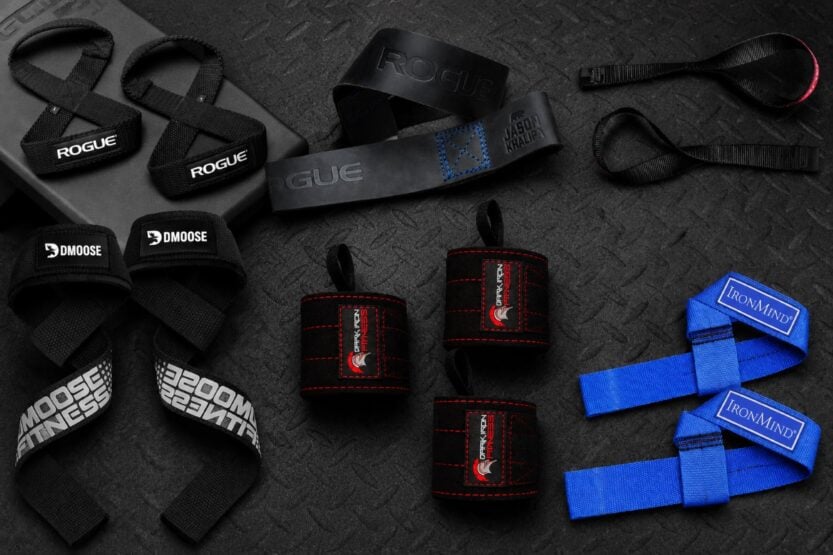
Lifting straps are not complicated pieces of equipment. That is exactly why they are worth getting right.
A good pair helps when your grip gives out before your back, hamstrings, traps, or lats are fully trained. For home gym lifters, that matters most on deadlifts, Romanian deadlifts, rows, shrugs, heavy dumbbell work, and some cable pulls.
The right choice depends on how you train. A general home gym lifter may want a padded lasso strap. A strong deadlifter may prefer figure 8 straps. An Olympic lifter usually needs a faster release. Here is how to choose without overbuying.
One note before the picks: straps are a training tool, not a competition tool. Sanctioned powerlifting and Olympic weightlifting meets do not allow them. Everything below is about what happens in your garage on a Tuesday, not what happens on the platform — which is exactly why home gym lifters get so much use out of them.
The first list you’ll see was chosen to match the needs for a majority of everyday lifters. Below those 7 picks you’ll find another table and list of the best lifting straps for very specific use cases, often meeting the needs of specialty lifters and people looking to preparing for competition.
The Best Lifting Straps For Most Lifters
| Pick | Best For | Key Specs | Why It Makes Sense |
|---|---|---|---|
| Gymreapers Lifting Wrist Straps | Best overall | 18″ cotton, neoprene-padded wrist | Lasso design with a strong mix of comfort, grip support, and value. |
| Harbinger Padded Cotton Lift Straps | Best budget option | 21.5″ x 1.5″ cotton, NeoTek pads | A simple padded cotton strap with more length than most budget options. |
| IronMind Strong-Enough Lifting Straps | Best heavy-duty pick | 21.25″ x 1.5″ nylon webbing, sewn loop | Strongman-proven toughness over plush padding. |
| RDX Lifting Straps | Best comfort-focused pick | 60cm cotton, 5mm neoprene, textured grip | Thickest padding here, built for higher-volume pulling. |
| Dark Iron Fitness Lifting Straps | Best suede/leather value | 18″ x 1.5″ cowhide suede, 2mm or 3mm | Leather-grade grip at a cotton-strap price, lifetime replacement. |
| Rogue Leather Lifting Straps | Best premium leather | 20.5″ x 1.5″ x 2mm American leather | Box-stitched, made in Ohio, molds to your wrists over time. |
| Rogue Heavy Duty Figure 8 Lifting Straps | Best for max-effort deadlifts | Basket-weave cotton webbing, sized to wrist | The most locked-in connection to the bar you can buy. |
Best Overall: Gymreapers Lifting Wrist Straps
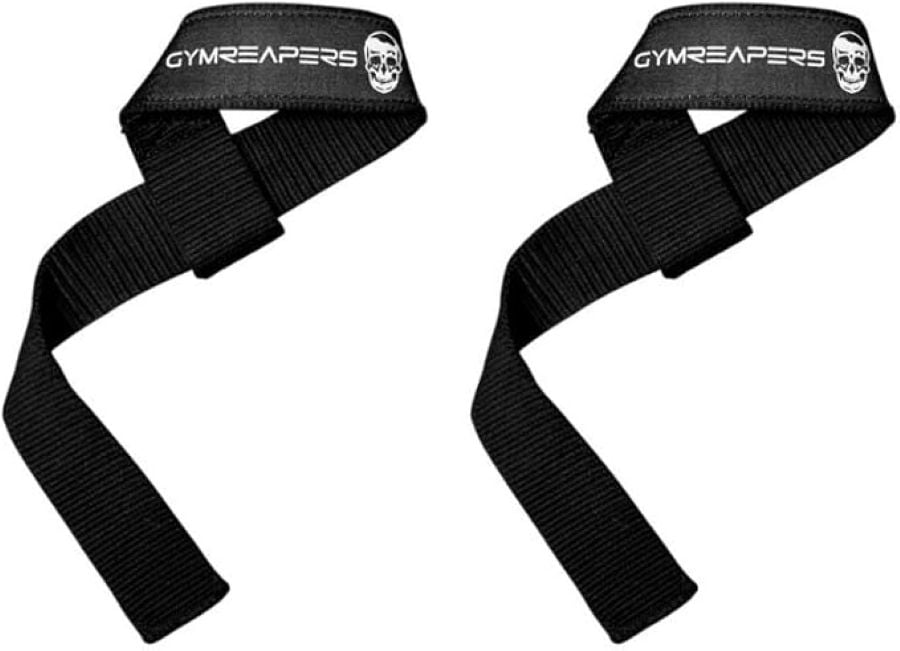
Gymreapers Lifting Wrist Straps are the safest recommendation for most home and garage gym lifters because they solve the biggest strap problem: they are supportive without being overly specialized.
The build. These are 18-inch cotton lasso straps with a neoprene pad sewn over the wrist section. Eighteen inches is a deliberate middle ground — long enough to wrap a barbell two or three times for a genuinely locked-in feel, short enough that you are not fighting a tail of extra material every set. Gymreapers backs them with a lifetime replacement guarantee, which is unusual at this price point and tells you something about how they expect the stitching to hold.
Why weightlifters and powerlifters like them. For powerlifters, the appeal is deadlift volume. Your grip is almost never the limiting factor on a single, but it absolutely becomes the limiting factor across five sets of five, or on a long RDL block where your hands are cooked before your hamstrings have done real work. A padded lasso strap lets you keep loading the posterior chain past the point where your fingers would have quit. For bodybuilding-style lifters, the neoprene pad is the whole story, when you are doing four exercises of back work in one session, the difference between a padded strap and a bare cotton one shows up as raw skin on your wrists. Olympic lifters use these for pulls and shrugs, but not for the competition lifts themselves.
The tradeoffs. The neoprene pad that makes these comfortable also adds bulk, which means they cinch slightly less tight against a small wrist than an unpadded strap will. And like any lasso strap, they take a few seconds per hand to set up, a non-issue for deadlifts, an annoyance if you are supersetting.
Who should buy them:
- Home gym lifters who want one versatile pair for everything
- Beginners moving into heavier deadlifts and rows
- Intermediates who want more grip support without committing to figure 8s
- Anyone doing repeated pulling sets who values wrist padding

Gymreapers Lifting Wrist Straps for Weightlifting, Bodybuilding, Powerlifting, Strength Training, & Deadlifts - Padded Neoprene with 18" cotton (Black - No Padding)
Best Budget Pick: Harbinger Padded Cotton Lift Straps
Harbinger Padded Cotton Lift Straps are a practical entry point for lifters who want to find out whether straps help their training at all.
The build. Each strap is 21.5 inches long and 1.5 inches wide, in cotton, with Harbinger’s NeoTek pad cushioning the wrist. They finish the ends with merrowed tabs — an overlocked edge stitch that stops the cotton from unraveling, and use heavy-duty stitching through the body of the strap. Harbinger has been making this category since 1988, and the design shows it: nothing clever, everything reinforced where straps actually fail.
Why weightlifters and powerlifters like them. The 21.5-inch length is the underrated feature. Most budget straps run shorter, and short straps are the ones that slip mid-set because you could only get one wrap around the bar. Three-plus extra inches means a genuine second wrap, which is the difference between a strap that supports a heavy pull and a strap that unspools at the top of a shrug. The 1.5-inch width also puts more cotton in contact with the knurling, which is where the friction that holds you to the bar actually comes from. Powerlifters use these for rows and shrug work; bodybuilders like them for high-rep dumbbell rows where you want your lats, not your forearms, to be the thing that fails.
The tradeoffs. Cotton is cotton. It will fuzz and eventually fray with heavy use and chalk, and the NeoTek pad is softer than plush, comfortable, not luxurious. If you are pulling near-max singles, doing strongman work, or want a material that will outlive your rack, step up.
Buy these if your priority is simple function and you want to test the concept before spending real money.

Harbinger Padded Cotton Lifting Straps with NeoTek Cushioned Wrist, 21.5 Inch Length, 1.5 Inch Width, Pair, Weightlifting Wrist Straps for Deadlifts and Strength Training, Black
Best Heavy-Duty Pick: IronMind Strong-Enough Lifting Straps
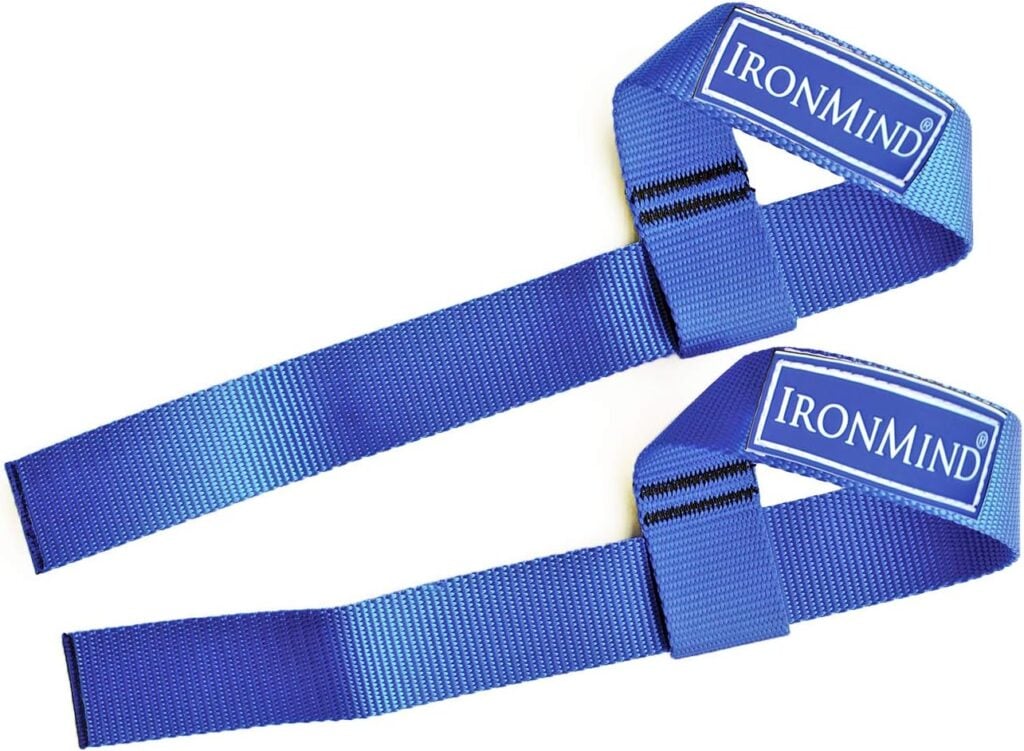
IronMind Strong-Enough Lifting Straps exist because of a specific failure. A friend of the company, Ken Brown, had a generic pair blow out at the 1999 World’s Strongest Man contest and missed the finals over it. IronMind’s response was to build a strap that would not do that.
The build. Blue flat nylon webbing, 21.25 inches long by 1.5 inches wide, with a sewn loop at one end. Made in the USA. That is the entire spec sheet, there is no padding, no branding gimmick, no adjustment hardware. The nylon is thin relative to its strength, which means it does not artificially fatten the bar the way a thick padded strap can. IronMind also sells a loop-free 18-inch version for lifters who want to be able to bail fast.
Why weightlifters and powerlifters like them. These were named the official strap of World’s Strongest Man in multiple years and have been the default on the pro strongman circuit for a long time. That is not marketing trivia; it is a durability datapoint from the population that abuses equipment hardest. Powerlifters like them for the same reason: the thin, high-tensile webbing gives a very direct feel of the bar, and there is nothing between your wrist and the load to compress and shift under a heavy pull. If you have ever had a padded strap creep and rotate mid-rep, the appeal is obvious. Olympic lifters gravitate toward the no-loop version, because a closed loop is the thing that makes bailing out of a failed clean awkward.
The tradeoffs. No padding means the webbing edge can bite, especially before break-in. Nylon is also slick out of the package, the standard fix is chalk plus deliberately scuffing the straps against an aggressive knurl for a few sessions until they grip. And at 21.25 inches with a loop, they are on the long side for small wrists or for anyone who wants an easy exit from a lift.
Choose these if toughness is the priority and you are willing to trade comfort for it. If comfort is the priority, Gymreapers or RDX will be easier to live with.
Unable to load product right now.
Best Comfort Pick: RDX Lifting Straps
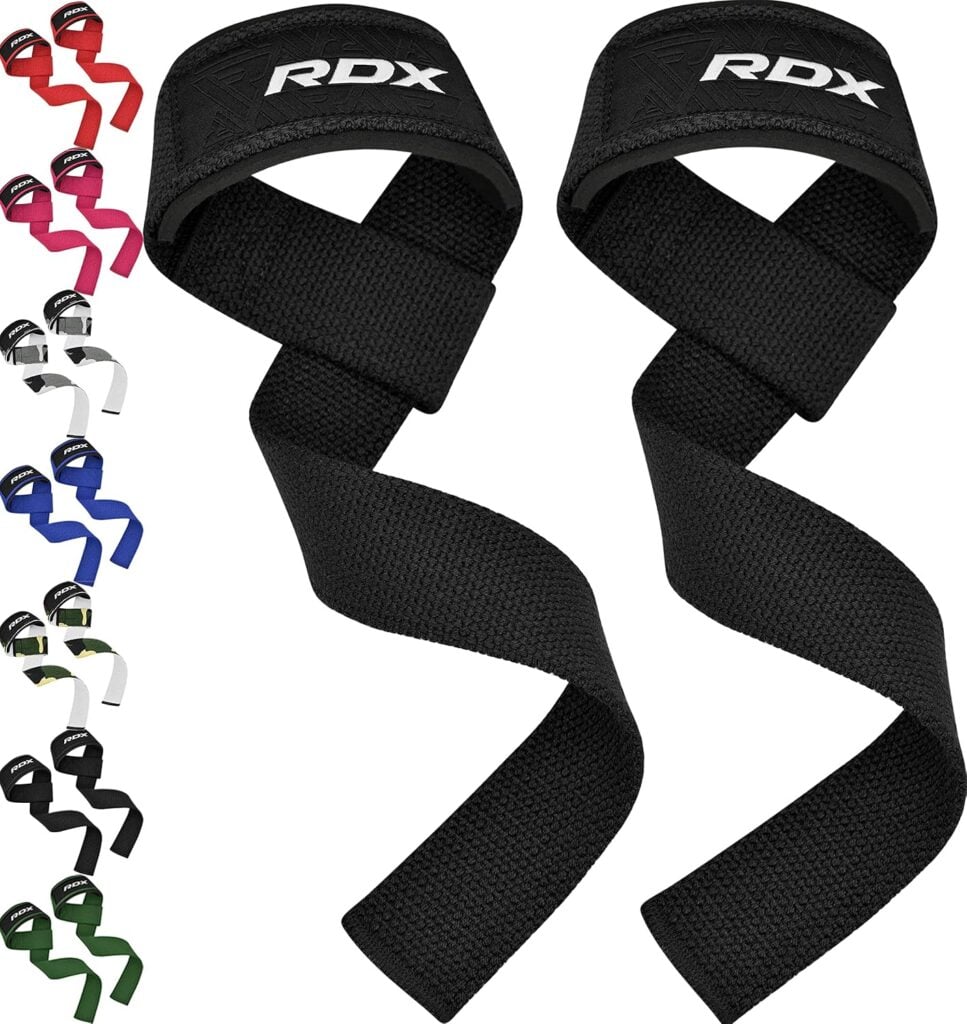
RDX Lifting Straps are for lifters who want support but do not want their wrists beat up after every pulling day.
The build. 100% cotton straps at 60cm, roughly 23.5 inches, the longest in this lineup — with 5mm of neoprene padding at the wrist and cross-stitched reinforcement. Many versions add a textured anti-slip surface (rubberized dots or a gel-mapped pattern) on the bar-contact side.
Why weightlifters and powerlifters like them. Two features do the work here. First, 5mm of padding is genuinely thick, noticeably more than the thin pad on most cotton straps — which matters on the fourth set of shrugs when the bar is trying to guillotine your wrist. Second, the textured grip surface means you are not relying on friction from cotton alone, so a single wrap holds better than it otherwise would. That combination suits bodybuilding-style back training and higher-volume powerlifting accessory work: heavy dumbbell rows, shrugs, moderate-to-heavy deadlift volume, lat pulldowns, farmer’s walks.
There is also a boring but real argument for comfort: you actually use the accessory that does not dig, bunch, or distract you. Consistency beats optimization.
The tradeoffs. The extra length and thick padding make these the bulkiest option here. They take longer to set up than a short strap, and the thickness effectively increases bar diameter, which some lifters dislike on max-effort pulls. Nylon or leather will also outlast cotton under heavy chalk use.
Consider RDX if your pulling sessions are long and your wrists are the thing complaining.

RDX Lifting Straps for Weightlifting –100% Cotton Heavy Duty Gym Wrist Strap with 5MM Neoprene Padding, 60CM Anti-Slip Hand Grip Wraps for Deadlifts Powerlifting Workouts Strength Training, Men Women
Best Suede Value Pick: Dark Iron Fitness Lifting Straps
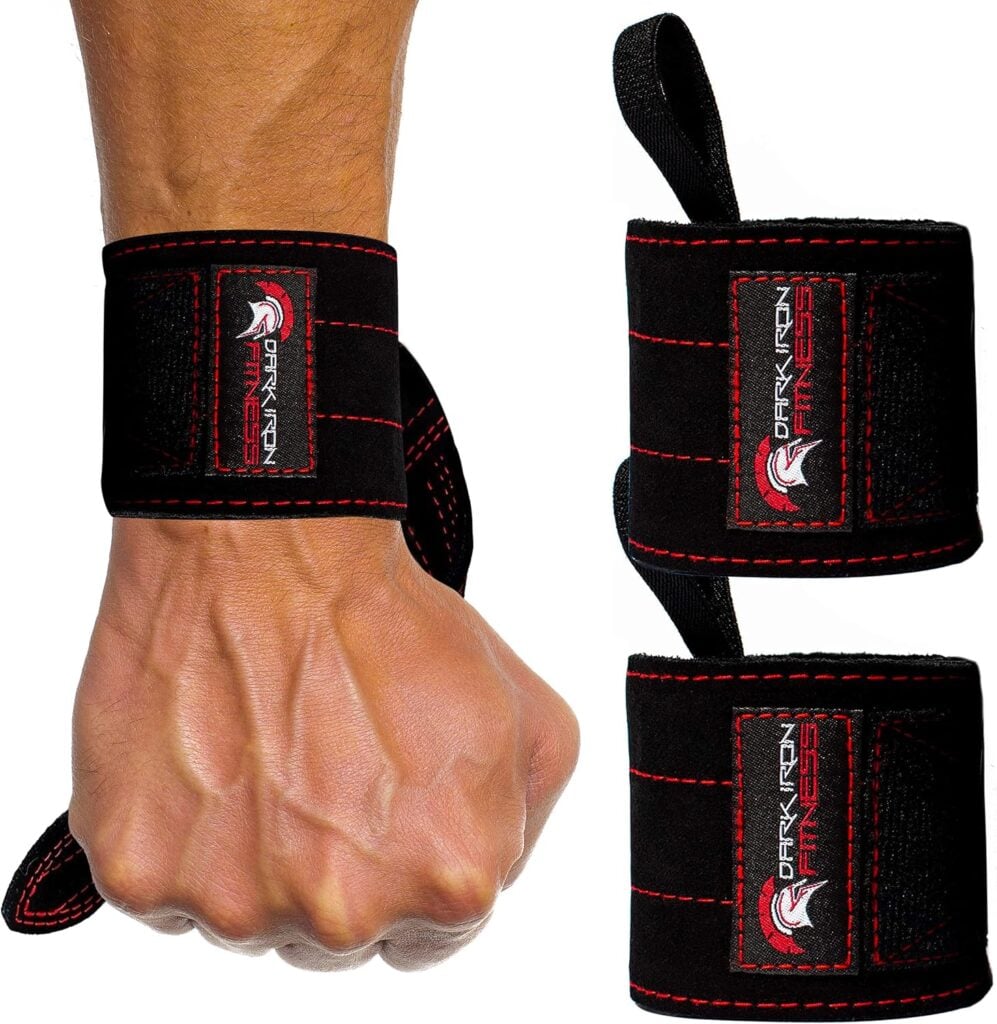
Worth correcting a common assumption: these are not a generic cotton strap. Dark Iron Fitness makes their lifting straps from cowhide suede, and that changes both who they suit and how they behave.
The build. 18 inches long, 1.5 inches wide, in durable cowhide suede, with reinforced stitching running the full length of the strap. They are sold in two thicknesses, 2mm and 3mm, with the thicker option intended for the heaviest pulling. Dark Iron deliberately keeps the wrist section free of long neoprene padding so the strap can actually cinch tight on any wrist size, and at 18 inches they will take about three wraps around a bar. Registration within a week of delivery activates a lifetime replacement warranty.
Why weightlifters and powerlifters like them. Suede grips. Cotton relies on weave friction and gets slick when it is worn or chalky; suede’s nap catches the bar knurling and stays put, which is why lifters who have had cotton straps slip mid-pull often switch to leather or suede and never go back. The tight-cinch design is the other draw — a strap that is loose at the wrist transfers load poorly, and padded straps sometimes cannot be tightened enough on a slim wrist to feel secure. Powerlifters get a secure, low-bulk pull without figure 8 commitment. Bodybuilders get a strap that does not chafe the way rough cotton does on high-rep work.
The tradeoffs. No wrist padding, so the strap edge sits directly against skin. Suede also needs a little care, it is not something you want soaking in sweat and left in a gym bag indefinitely. The thickness choice matters too: pick the 3mm if your top-end pulls are heavy, since the 2mm is the lighter-duty option.
Buy these if you want leather-grade grip without paying premium-leather prices.

Dark Iron Fitness Wrist Wraps for Weightlifting, Heavy Duty Gripping Suede Leather Bands for Men & Women, Support Straps Gloves Alternative for Power Lifting Weight Strength Training Workouts
Best Premium Leather: Rogue Leather Lifting Straps
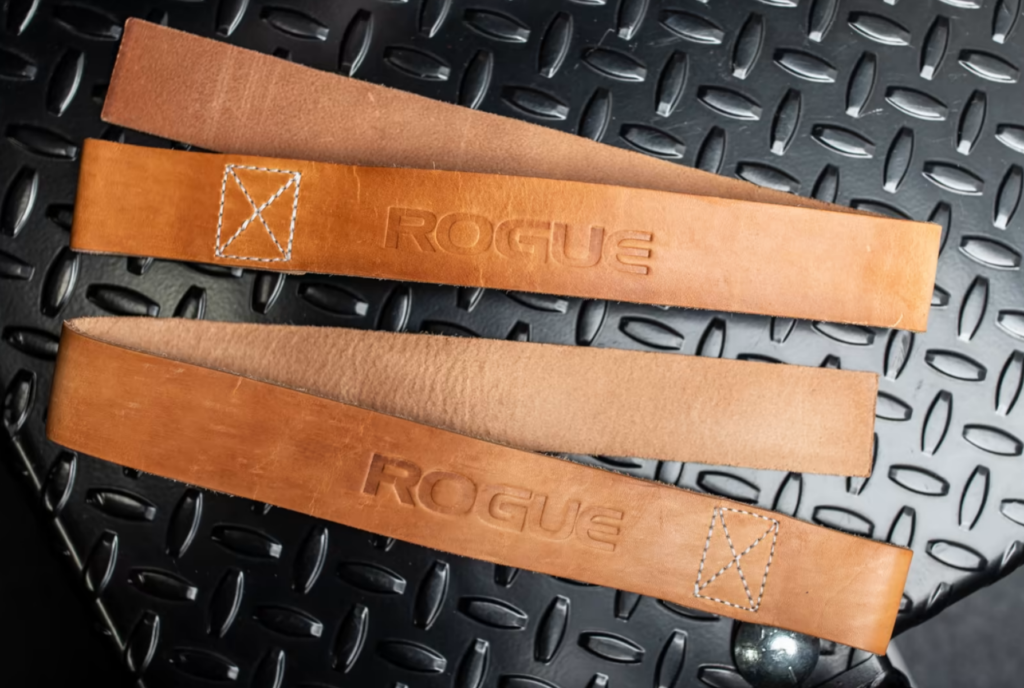
Rogue Leather Lifting Straps are the pick for lifters who like the natural grip and feel of leather and want a strap that will still be in the gym in a decade.
The build. 100% genuine American leather, cut to 24 inches long by 1.5 inches wide at 2mm thick, sewn in Columbus, Ohio, with heavy-duty box-stitching at the loop — the reinforcement pattern that puts a stitched rectangle with an internal X across the highest-stress joint. Debossed with the Rogue logo, sold in pairs, available in black and coyote.
Why weightlifters and powerlifters like them. Three things. First, leather molds. Over months of use the strap stretches slightly and takes the shape of your wrist and the impression of your bar’s knurling, so it ends up fitting like it was cut for you, the opposite of cotton, which just degrades. Second, at 2mm the leather is softer against skin than a nylon webbing edge, so you get far less of the strap burn that shows up on heavy sets with abrasive synthetics. Third, box-stitching at the loop is the correct answer to where straps actually tear. Powerlifters use these for deadlifts, shrugs, and heavy rows; Olympic lifters generally prefer Rogue’s shorter Oly leather version, which needs no break-in and releases faster.
The tradeoffs. Leather is stiff out of the package and needs break-in. Several lifters note that stiff new leather makes one-handed setup awkward — once the first strap is on the bar, wrangling the second is fiddly until the material softens. Leather also will not feel as absolutely locked-in as a figure 8, so if that is your goal, buy the figure 8 instead. And some people simply prefer synthetics for equipment they intend to treat badly.
Check out the Rogue Leather Lifting Straps on the official product page where you can also see user reviews and more info.
Best Figure 8 Pick: Rogue Heavy Duty Figure 8 Lifting Straps 2.0
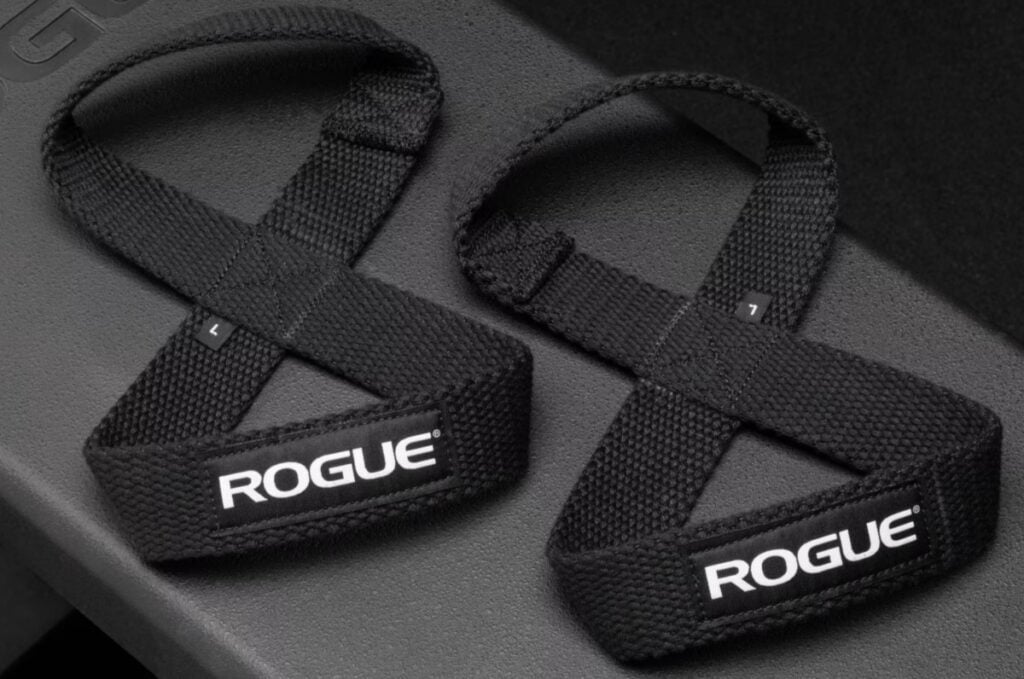
Figure 8 straps do a different job than everything above. Instead of wrapping the bar, the strap forms two loops: one around your wrist, the other under the bar, with your wrist through the second loop. The bar is now inside a closed circuit that cannot unwrap.
The build. Rogue uses extra-strength cotton webbing in a basket weave, sized for a deadlift bar, made in the USA and sold in pairs. Worth knowing if you are shopping now: Rogue’s original version is one-size-fits-most, while the newer Heavy Duty 2.0 comes in small, medium, and large based on wrist circumference. Sizing matters enormously with figure 8s, a strap that is too long leaves slack and defeats the purpose, and a strap that is too short will not let you close your hand comfortably around the bar. Measure your wrist before ordering.
Why weightlifters and powerlifters like them. This is the most secure connection to a bar that exists, full stop. The double loop cannot slip and the bar cannot roll out of your hand, which is why figure 8s dominate strongman and heavy-deadlift training. For a powerlifter, the value is being able to train deadlift volume, rack pulls, and heavy shrugs with grip entirely removed from the equation — you find out what your hips and back can do rather than what your hands will allow. Many lifters report an immediate PR-adjacent jump the first time they use them, not because they got stronger but because grip had been quietly capping them.
The tradeoffs, and this one is a safety issue. Figure 8s do not release quickly. That is the entire point of the design and also its main danger. You should not use them for anything you might need to dump, no cleans, no snatches, no overhead work, and be thoughtful about them on any lift where losing the bar forward is a real possibility. They also feel stiff and can bite into the wrist, since all the load rides on a narrow band of webbing. Use them for heavy deadlifts, rack pulls, and shrugs. Use a lasso strap for everything else.
Learn more about the Rogue Heavy Duty Figure 8 Lifting Straps on the official product page and view all of the excellent user reviews for this simple but effective gym tool.
Specialist And Alternative Options – The Best Lifting Straps For The Serious Powerlifter
The seven picks above cover most lifters. These six exist for specific problems — mostly problems of length. Length is the single biggest variable in this category, because it determines the tradeoff between security and how fast you can get off the bar.
| Strap | Length | Material | Best For |
|---|---|---|---|
| Rogue Speed Straps | 11.75″ x 1″ | Nylon webbing | Fastest possible release, snatch-heavy training |
| Rogue Oly Lifting Straps | 10″ | Nylon webbing | Olympic lifts on a budget |
| Khalipa Series Lifting Straps | 17.25″ x 1.5″ | American leather | Mixed-modal training, fast transitions |
| Rogue Ohio Lifting Straps | 20″ x 1.5″ | Cotton (nylon version available) | Simple all-purpose closed-loop strap |
| DMoose Deadlift Straps | 24″ x 1.5″ | Cotton + silicone webbing | Maximum wraps and grip texture |
Rogue Oly Lifting Straps
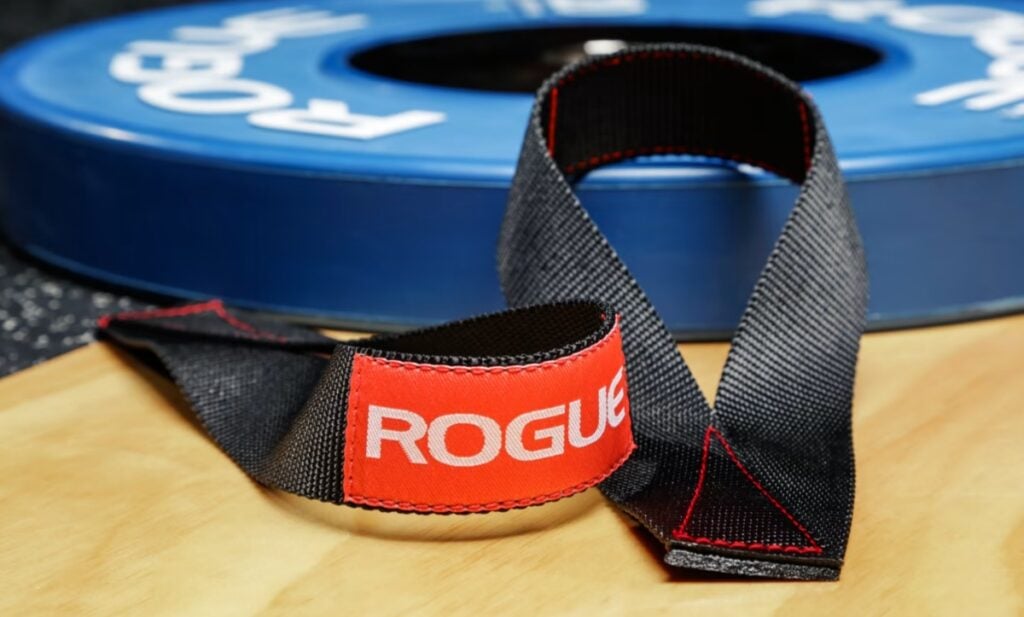
Ten inches of nylon webbing sewn into a single closed loop, manufactured in Ohio. There is no lasso here, you slip the free end around the bar and back through the fixed loop, which takes about a second per hand.
Why weightlifters like them. The short length is the entire feature. In a snatch or a clean, a failed rep means the bar has to leave your hands right now, and a long strap wrapped three times around the bar is the thing standing between you and that. Ten inches gives you enough purchase to hold a heavy pull and not enough to trap you. Nylon also has a slick, consistent texture that many lifters prefer specifically because it releases the same way every time, predictability matters more than maximum friction when you are dropping a bar from overhead. Rogue positions nylon as the middle option: cheaper than leather, more durable than a lot of cotton.
The tradeoffs. Reviewers are consistent and blunt about the limit, these are too short to be much use for deadlifts, and some find them awkward to set up and a bit slippery. This is a specialist tool, not a do-everything strap. If you train the competition lifts and pull heavy deadlifts, you will end up owning two pairs of straps.
Check out more info on the Rogue Oly Lifting Straps.
Rogue Khalipa Series Lifting Straps
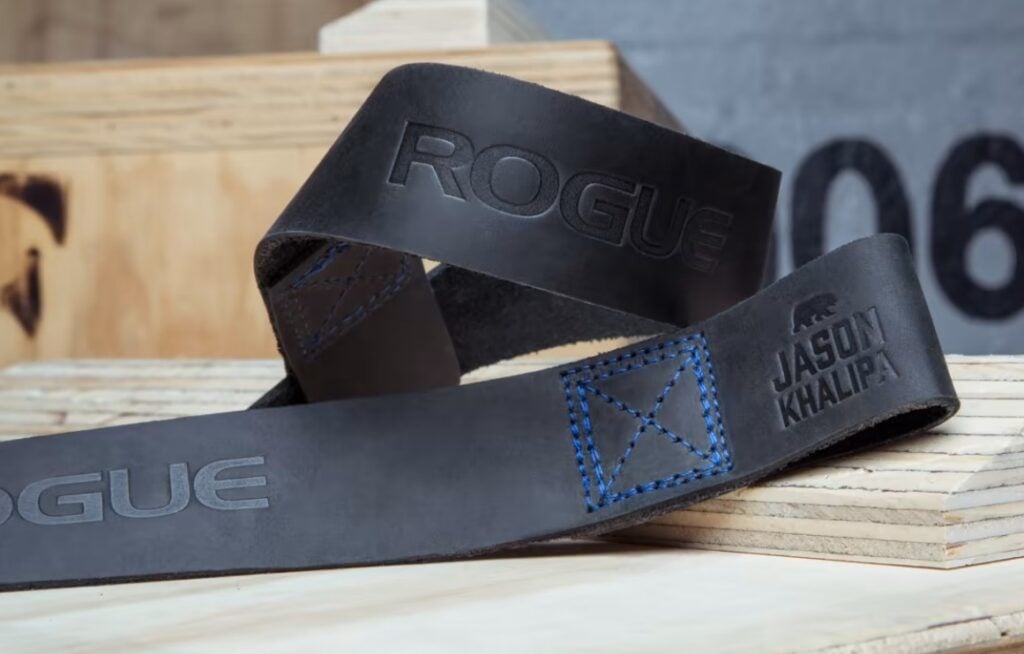
Rogue built these with CrossFit athlete Jason Khalipa to his own spec: American leather, sewn in Ohio, 1.5 inches wide but a relatively short 17.25 inches.
Why lifters like them. This is the useful middle ground nobody talks about. A 10-inch Oly strap is too short for heavy pulling; a 21-inch lasso strap is too slow when you are moving between movements under time. At 17.25 inches you get a real wrap with a genuinely fast setup, which suits anyone whose training is not neatly one discipline, CrossFit-style sessions, circuits, conditioning that includes pulling, or a powerlifter who just does not want to spend fifteen seconds per set fussing with strap tails.
The tradeoffs. Being a middle ground means it is nobody’s optimum. It will not lock in like a 21-inch strap on a max deadlift and it will not release like a Speed Strap on a snatch.
Check out the special edition Rogue Khalipa Series Lifting Straps.
Rogue Ohio Lifting Straps
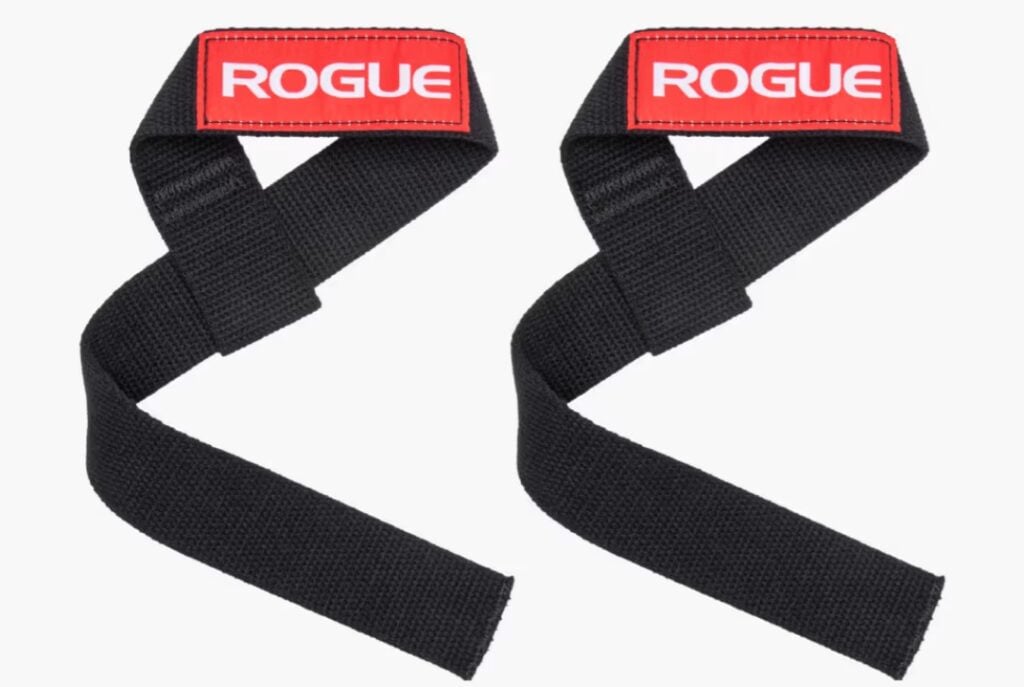
Twenty inches by 1.5 inches of industrial-grade cotton webbing in a single closed loop, with a reinforced sewn end to resist fraying and a stitched Rogue logo patch. Rogue also makes a nylon version with the same closed-loop design and 1.5-inch width at a comparable 20-inch-plus length, for lifters who want the durability of nylon in a standard-length strap.
Why weightlifters and powerlifters like them. This is the plain, correct, do-everything cotton strap. The closed loop means setup is fast — the free end goes around the bar and through the loop, no threading a lasso, while the 20-inch length still gives you enough material for a secure hold on deadlifts, rows, and shrugs. Cotton is soft on the wrists but holds up well under tension, which is the whole reason cotton has survived as a strap material for decades.
The tradeoffs. Reviews are mostly strong but not unanimous: some users report premature fraying or tearing, and a minority think the price is high for a basic design. Rogue’s product guidance for this accessory category lists a 90-day warranty against manufacturing defects such as stitching failure or material flaws — noticeably shorter coverage than the lifetime replacement you get from Gymreapers or Dark Iron.
Check out the Rogue Ohio Lifting Straps.
DMoose Deadlift Straps
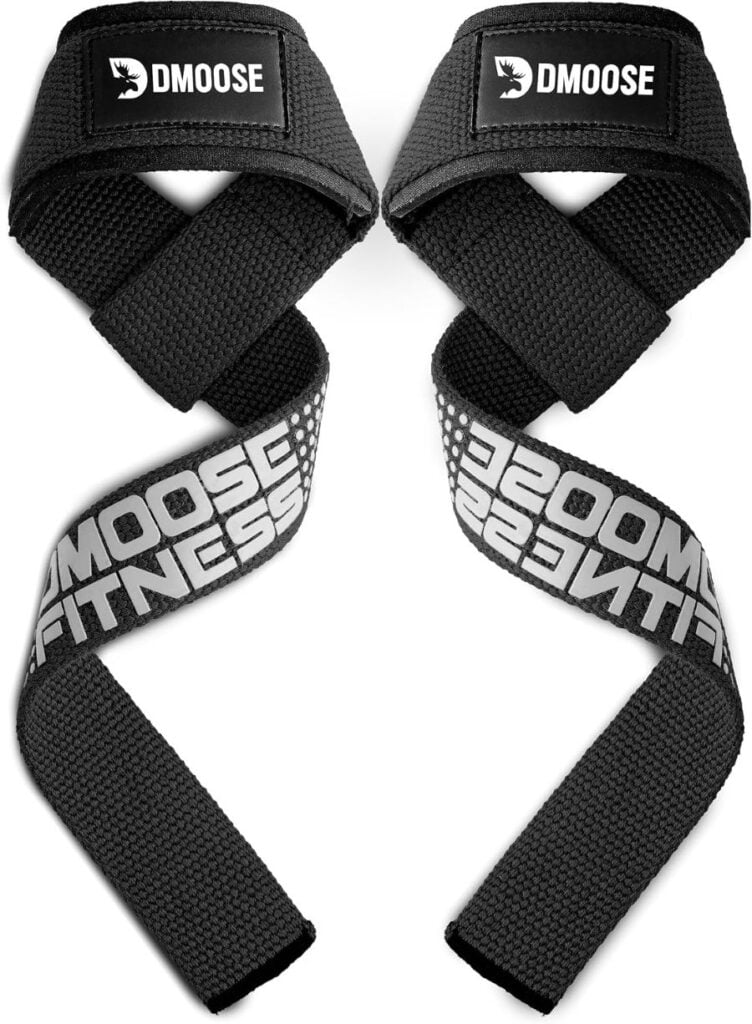
Twenty-four inches by 1.5 inches of cotton webbing with neoprene wrist padding and, most distinctively, non-slip silicone threading worked into the section that contacts the bar. DMoose sells variants at 5mm and 4mm padding thickness.
Why powerlifters like them. Two features stack here. The 24-inch length is the longest of anything in this guide, which means the most wraps and the most bar contact, if you have ever felt a strap start to unspool at the top of a heavy shrug, more length is the direct fix. The silicone threading then adds mechanical grip on top of cotton friction, so the strap holds position even when your hands and the bar are both slick with sweat. For deadlift volume and heavy rows, that combination is genuinely reassuring.
The tradeoffs. Twenty-four inches is a lot of strap. Setup is slower, the tail has to go somewhere, and the extra wraps meaningfully increase effective bar thickness. At least one 2026 roundup also flags that stitching on the lower-priced variants can give out under extreme loads, positioning these as better for moderate-to-heavy work than for daily maximal pulling. Note the padding difference between versions before you buy.
DMoose Lifting Straps, 24 inch (Pair) Wrist Straps for Weightlifting, Deadlift, Powerlifting, Bodybuilding Gym Workout, Neoprene Padded Support Cotton Straps for Max Hand Grip Strength Training
Rogue Speed Straps
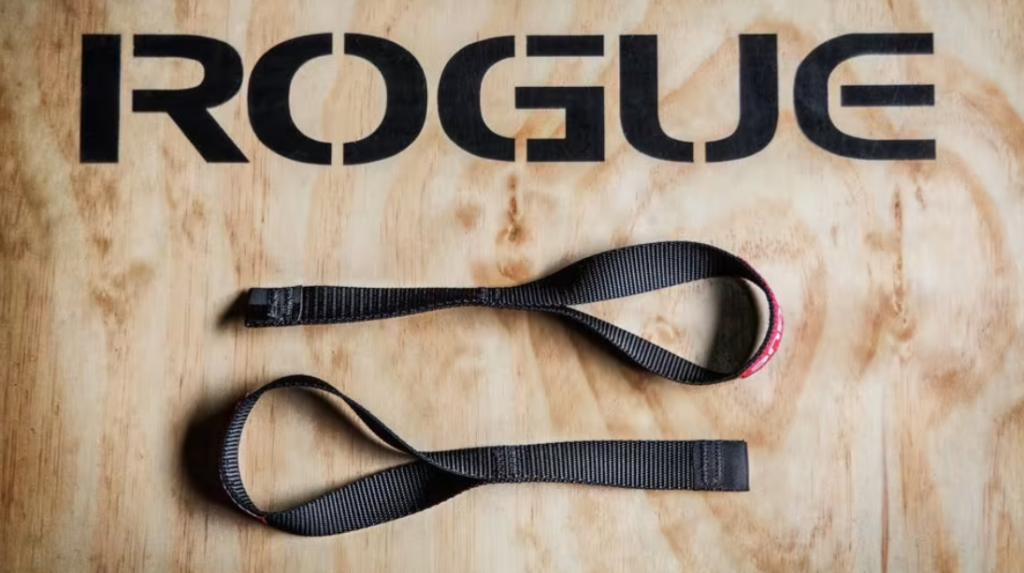
The most specialized item here. Just 11.75 inches long and 1 inch wide, noticeably narrower than the 1.5 inches almost everything else uses, in black nylon webbing with double bar-tack stitching, made in the USA. The bar-wrapping ends are finished with a nylon strip to hold the webbing’s shape and stop fraying.
Why weightlifters like them. Three things, all about speed. The short length gives instant separation from the bar on a drop, which is the entire safety case for using straps on snatches at all. The fixed closed loop cannot over-tighten on your wrist, so you are not cutting off circulation between attempts. And the loop keeps the strap sitting in ready position on your wrist between sets, so setup time is effectively zero — you are not re-threading anything, you just grab the bar.
The tradeoffs, and they are real. That 1-inch width is polarizing. Reviewers describe them as strangely thin, with more than one wishing the webbing were wider, and a narrow strap concentrates load on a smaller band of wrist. Rogue itself frames the width as a preference thing rather than an upgrade over the 1.5-inch Oly straps. If you like a substantial strap in your hand, you will probably dislike these. If your priority is that the bar leaves your hands the instant you decide it should, nothing here beats them.
Check out the Rogue Speed Straps.
How to Choose the Right Lifting Strap Type
Most lifters should start by choosing the strap style, not the brand. The best strap for your garage gym depends on the movements you actually do.
Lasso straps
The most common all-around choice. They loop around your wrist, then wrap the bar. They work for deadlifts, rows, shrugs, pulldowns, and dumbbell work.
For most home gym owners, this is the right first strap style. Gymreapers, Harbinger, RDX, Dark Iron, IronMind, and Rogue’s leather and Ohio straps are all variations on it.
Figure 8 straps
Designed for maximum security. Excellent for heavy pulls, less versatile because they do not release quickly.
Choose them if your training is deadlift-heavy and you already understand how straps affect your setup. Size them to your wrist.
Olympic or speed straps
Shorter, usually a single closed loop, chosen when fast release matters. More specialized than lasso straps.
If you mostly train cleans, snatches, and pulls, this style is a better fit than figure 8s, which you should not be using for those lifts at all. Rough length ladder: Speed Straps at 11.75 inches and Oly straps at 10 inches for maximum release speed, Khalipa at 17.25 inches for a compromise, Ohio at 20 inches and standard lassos at 18 to 24 inches for security.
Hook straps
Hook straps use a built-in hook to connect to the bar. Some lifters like the convenience, but most home gym owners prefer traditional straps because they are simpler, smaller, and easier to pack away. Hooks also concentrate load on a small area and remove your hand from the equation entirely, which some lifters find changes their pull mechanics.
When Should You Use Lifting Straps?
Straps are not a replacement for building grip strength. They are a tool for sets where grip is limiting the target muscle.
Use them when your hands are failing before the muscles you are trying to train. That often happens on:
- Heavy deadlifts
- Romanian deadlifts
- Barbell rows
- Dumbbell rows
- Shrugs
- Lat pulldowns
- Cable rows
- Farmer’s walks and loaded carries
- High-rep pulling work
Do not use them for every warmup set. Let your grip do some work, then strap in when the training goal shifts from grip development to loading the back, hamstrings, or traps.
If you compete in powerlifting or weightlifting, remember that you will be pulling without straps on meet day. Keep some unstrapped work in your program so your grip is not a surprise variable in a singlet.
What to Look for Before You Buy Lifting Straps
- Comfort: padding helps if straps usually dig into your wrists. 5mm neoprene is on the thick end; unpadded nylon and suede sit at the other.
- Material: cotton is familiar, flexible, and cheap, but wears out. Nylon is tougher and slicker until broken in. Leather and suede grip best and last longest, at a price and with light maintenance.
- Length: longer straps allow more wraps and a more secure hold, but slow down setup and add bulk to the bar. Roughly 18 inches is a good general-purpose target; 20 to 23 inches favors security; 10 to 17 inches favors fast release.
- Release: if you might need to bail, avoid figure 8s and closed loops for that lift.
- Sizing: mostly irrelevant for lasso straps, critical for figure 8s. Measure your wrist circumference.
- Durability and warranty: watch for fraying, stitching failure, or structural tearing, and replace straps before they become a safety problem. Gymreapers and Dark Iron both offer lifetime replacement; Rogue’s accessory guidance lists a 90-day defect warranty.
- Use case: a bodybuilding back day, a powerlifting deadlift session, and an Olympic lifting session do not all demand the same strap.
For most people building a home or garage gym, Gymreapers Lifting Wrist Straps are the best place to start. They are versatile, padded, easy to use, and appropriate for the pulling exercises most lifters actually perform.
If you want the cheapest useful option, choose Harbinger Padded Cotton Lift Straps, the extra length punches above the price. If you pull heavy and want something that will not fail, IronMind Strong-Enough Lifting Straps carry a strongman pedigree for a reason.
If your wrists are the complaint, RDX has the thickest padding here. If you want leather-grade grip on a budget, Dark Iron Fitness suede straps are the value play, and Rogue Leather is the version you buy once and keep.
If deadlift security is the only thing you care about, Rogue Heavy Duty Figure 8 Lifting Straps are the specialized pick, just size them properly and keep them away from anything you might have to drop.
The best lifting straps are the ones that support your training without taking over your training. Use them when grip is the weak link, keep training your hands when it matters, and replace worn straps before they become a safety problem.

