
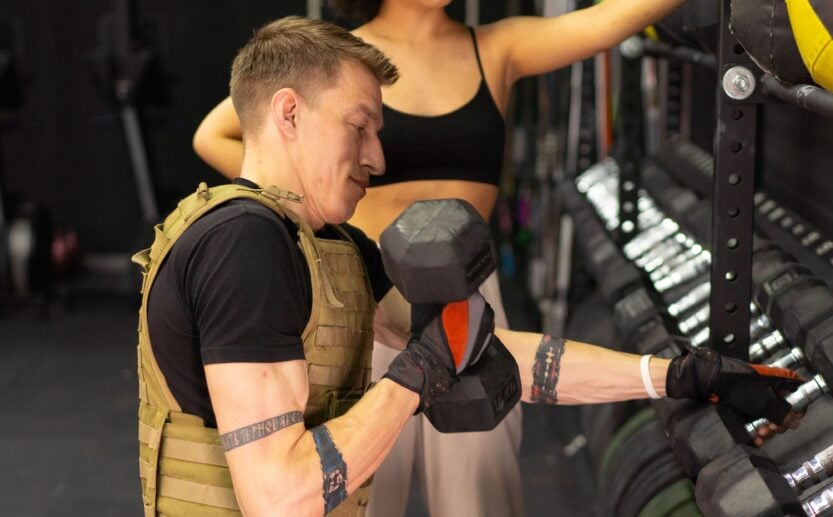
Adding a weighted vest can be an efficient way to increase training intensity without buying large plates or changing equipment. This article explains how a weighted vest affects movement, how to choose one for a garage gym, and how to use it in a structured plan for beginners.
You will find practical guidance on vest types, safety checkpoints, a sample progressive program, and a short comparison table to help you decide. The focus is on controlled progress, injury prevention, and keeping recovery manageable while getting measurable fitness gains at home.
How A Weighted Vest Changes Load And Movement
A weighted vest adds load close to your torso. That placement keeps the center of mass near your body, which changes how your muscles work during walking, running, and bodyweight exercises. For many movements, a vest increases the demand on the legs, core, and back without altering joint angles or bar path.
Practical impact: you can make pushups, pullups, lunges, and sprints harder without adding external bars or plates. A vest also lets you load unilateral movements like step-ups more safely because the weight moves with you rather than shifting in your hands.
Choosing The Right Vest For A Garage Gym
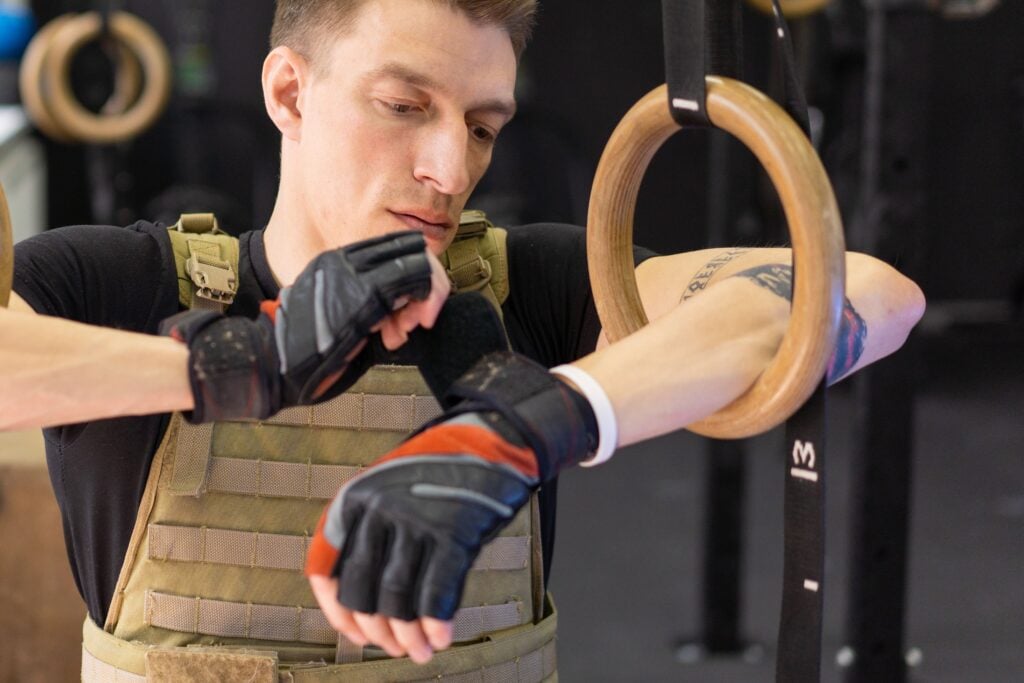
There are several common designs. Choose based on how you plan to train, your mobility, and the total load you will need over time. Fit and comfort are more important than brand features for beginners because poor fit causes movement issues and chafing.
Key fit points: the vest should sit snugly on the torso, allow a full range of shoulder motion, and not interfere with breathing. Padding over the collarbone and adjustable straps are useful. Try to avoid vests that shift dramatically when you move from horizontal to vertical positions.
Types Of Weighted Vests
| Type | How It Adds Load | Best For | Pros | Cons |
|---|---|---|---|---|
| Fixed Weight Vest | Padded weight sewn into vest | Cardio, bodyweight circuits | Simple to use, durable | Limited progression, heavier at start |
| Adjustable Plate Vest | Holds small plates or metal inserts | Strength progression, pullups | Easy to add/remove weight, scalable | May be bulky, plates can shift |
| Sand Or Bead Vest | Filled pockets with sand or beads | Functional conditioning | Lower cost, conforms to body | Harder to add precise increments |
Safety And Progression Principles
Start light and add weight gradually. A small increase will often produce better long-term results than large jumps that disrupt technique. Track perceived exertion and performance. If a movement loses quality because of the vest, reduce load or revert to bodyweight until form returns.
Injury prevention: watch for low back rounding on loaded squats or bent-over rows, and for shoulder strain on loaded pullups. Use the vest primarily for exercises that keep the spine neutral and the core engaged.

ZELUS Weighted Vest, 6lb/8lb/12lb/16lb/20lb/25lb/30lb Weight Vest with Reflective Stripe for Workout, Strength Training, Running, Fitness, Muscle Building, Weight Loss, Weightlifting, Black(12 lb)
A Structured 6-Week Garage Gym Plan For Beginners
This plan assumes basic experience with bodyweight movements and access to a pull-up bar, squat rack or squat alternative, and a flat space for sprints or sled work. Train three times per week on non-consecutive days to allow recovery. Focus on form, steady progression, and consistent rest.
Progression rules: add 2.5 to 5 pounds when you complete all sets with good form for two workouts in a row. If your vest increments are larger, add a single week of reduced volume before increasing weight.
Weekly Session Structure
- Warm-up: 5 to 10 minutes of mobility and dynamic movement.
- Main strength movement: 3 to 5 sets focused on controlled tempo.
- Accessory circuit: 2 to 4 exercises for 3 rounds.
- Conditioning finisher: short interval or loaded carry.
Sample 6-Week Plan Overview
| Week | Focus | Load Guidance |
|---|---|---|
| 1-2 | Movement patterning, light loading | Use minimal vest weight to learn cues |
| 3-4 | Build strength and capacity | Increase load slightly if form holds |
| 5-6 | Consolidate gains, add intensity | Use heavier vest for short sets or sprints |
Example Session A
Warm-up, then 4 sets of 6 to 8 pushups with the vest. Rest 90 seconds between sets. Follow with 3 rounds of 8 single-leg step-ups per leg, 10 bent-over rows, and 30 seconds of plank. Finish with a 6 x 20-second loaded sprint or sled push with 40 seconds rest.
Example Session B
Warm-up, then 5 sets of 3 to 5 jump squats or front squats depending on equipment. Use the vest for bodyweight jumps or step-ups, not for heavy barbell squats. Follow with 3 rounds of pullups or ring rows, 10 walking lunges, and a farmer carry for distance.
How Using A Vest Affects Recovery And Nutrition
Weighted vests increase training stress because they raise metabolic cost and mechanical demand. That makes recovery planning more important. Prioritize sleep, add an extra easy day if soreness prevents quality sessions, and keep protein intake steady to support repair.
Monitoring fatigue: track session quality and energy. If performance declines for multiple workouts, reduce vest load or volume by 10 to 20 percent until performance stabilizes. Use light mobility days to restore movement and reduce soreness.
When To Avoid A Vest And When To Add One
A vest is not always the best tool. Avoid using one if you have acute joint pain, uncontrolled shoulder or neck issues, or if a vest changes your movement pattern negatively. Use it when you need simple, progressive overload for bodyweight work, walking, or short sprints.
Equipment purchases: start with an adjustable vest if you intend to train consistently. An adjustable vest extends the life of the purchase by allowing small increments. If you plan mostly conditioning work, a fixed weight or sand vest may be adequate and simpler.
Final Notes For Garage Gym Owners
Weighted vests can add versatility and challenge to home training without requiring more bulky equipment. The best outcomes come from measured progression, attention to technique, and balancing intensity with recovery. A modest plan over six weeks will reveal whether a vest fits into your long-term routine.
Takeaway: start light, prioritize form, and use consistent progression. A vest is a useful, compact tool for increasing load across many familiar movements in a garage gym setting.
If you need equipment recommendations for a compact garage or home gym, see our home gym essentials guide.

