

User Review
( votes)Kettlebells and dumbbells remain core options for strength work because each forces your body to move in different ways. Choosing deliberately between them changes how you progress, how much space you need, and how quickly you see strength and physique results.
This matters for home gym owners and coaches since equipment choice affects monthly spending, storage, and the types of programs you can realistically follow. The wrong pick can create plateaus or unnecessary injury risk.
How Kettlebells And Dumbbells Create Different Movement Demands
Kettlebells push you toward dynamic, momentum-based patterns because the weight sits away from the handle. That offset makes exercises like swings and snatches about timing, hip extension, and controlling a moving center of mass.
Dumbbells favor controlled, joint-friendly loading since the mass sits evenly around the handle. That makes them better for steady pressing, rowing, and slow eccentric work where constant tension is the goal.
How That Changes Muscle Recruitment
Kettlebell ballistics emphasize explosive hip power and posterior chain output by creating short, high-velocity peaks of force. Those peaks recruit hamstrings, glutes, and spinal erectors in a different pattern than traditional lifting.
Dumbbells keep muscles under more consistent tension across a movement, which is preferable when the priority is muscle growth or isolating a limb. That steady load tends to increase time under tension, a key driver of hypertrophy.
Which Tool Works Best For Strength Or Hypertrophy
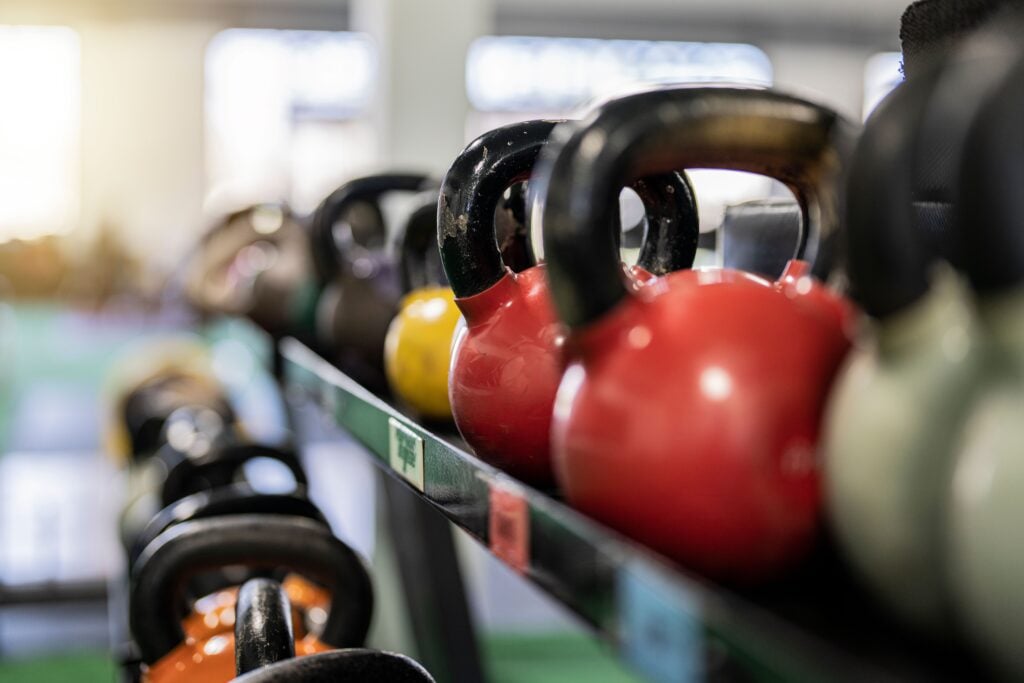
Neither implement is universally better; each serves specific training aims. Kettlebells are a go-to for power, conditioning, and certain unilateral carries. Dumbbells are typically more straightforward to program for incremental strength and muscle size.
For predictable progression and hypertrophy, dumbbells usually simplify the job because you can increase load in small, repeatable steps and hit classic set-and-rep ranges favored for strength and size gains.
Programming Considerations For Each Option
Kettlebell Programming
- Mix rep schemes by goal: lower reps and higher intent for power; longer sets for conditioning and work capacity.
- Drill the hip hinge and breathing pattern: effective swings and snatches depend on coordinated hip extension and tight core tension.
- Use kettlebells as a complement to heavy bilateral work: they improve speed, coordination, and conditioning without replacing heavy presses or squats when maximal strength is the target.

Amazon Basics Cast Iron Kettlebell for Strength Training, 45 Pounds, Black, Textured Wide Handle
Dumbbell Programming
- Follow structured progressive overload: traditional strength cycles (3 to 6 reps), hybrid strength work (6 to 8 reps), and hypertrophy ranges (8 to 15 reps) translate cleanly to dumbbell training.
- Include single-limb variations: unilateral presses and split squats address imbalances while reinforcing core stability.
- Control tempo for growth: emphasizing slow eccentrics and deliberate pauses increases mechanical tension without needing maximal absolute load.
Practical Home Gym Considerations
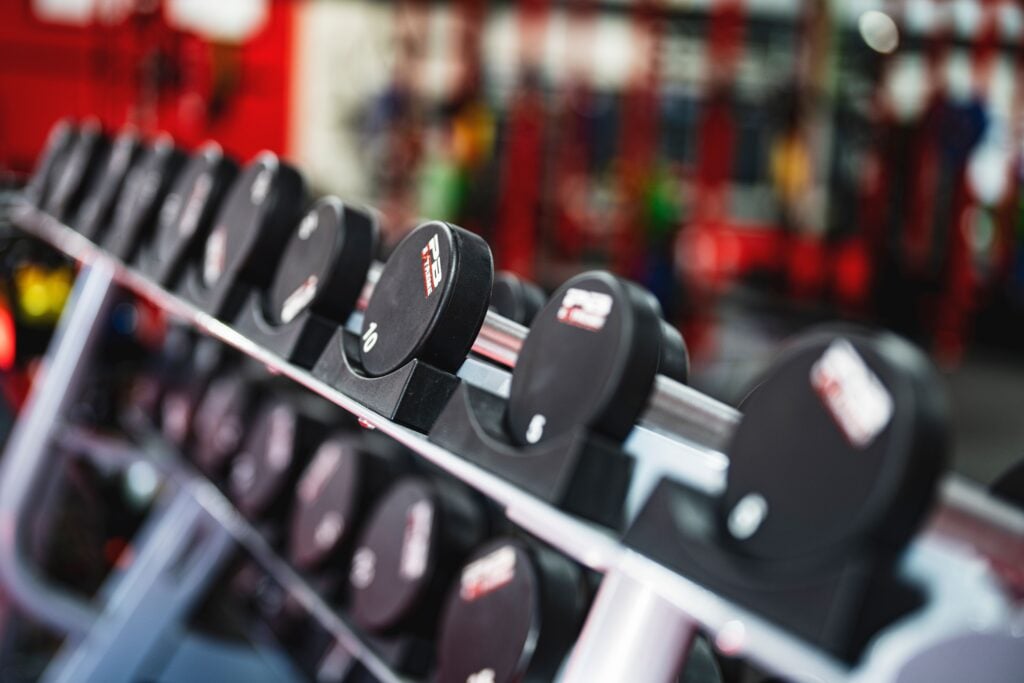
Space, budget, and progression strategy ought to guide your purchases. An adjustable dumbbell can replace a rack of fixed pairs and keep your footprint small. If you prefer kettlebell-style training, owning several distinct kettlebell weights is often necessary to progress sensibly.
Durability and user skill matter. Dumbbells are low maintenance and intuitive for most lifters. Kettlebells have a steeper technical curve but add movements like ballistic swings and getups that dumbbells do not replicate as naturally.
If you want buying guidance, start with resources on the best equipment for each role — whether you are shopping for adjustable dumbbells to save space or picking a solid kettlebell collection by consulting recommendations on best kettlebells for the home gym.
Quick Comparison Table
| Feature | Kettlebell | Dumbbell |
|---|---|---|
| Primary Strength Benefit | Power and hip-dominant output | Consistent hypertrophy and pressing strength |
| Stability Demand | High because of offset load | Moderate to high when used single-arm |
| Progression Ease | Better with multiple weights to avoid large jumps | Easier with incremental plates or adjustable models |
| Space Needed | Small footprint per bell, but useful to own a few | Compact with adjustable options, pairs add up |
| Best For | Conditioning, ballistic power, carries | Presses, rows, slow time-under-tension work |
When To Favor One Tool Over The Other
Pick kettlebells when your focus is explosive hip power, conditioning rounds, and compact versatility. They let you fold strength and cardio-style work into short sessions effectively.
- Kettlebells shine for: swings, Turkish getups, loaded carries, and high-skill single-arm ballistics.
- Dumbbells shine for: bench and overhead pressing, controlled rows, and systematic hypertrophy progressions.
Pick dumbbells when you want precise loading increments and straightforward programming. Their predictable load path makes them ideal for hypertrophy blocks and linear strength cycles.

CAP 100lb Rubber Hex Dumbbell Set with Vertical Black Rack
Sample Workouts Tailored To Goals
Power And Conditioning Session With Kettlebells
- General warm up plus mobility to prime the hips.
- 3 rounds of 10 controlled kettlebell swings focusing on fast hip snap.
- 3 rounds of 6 single-arm kettlebell snatches per side with full recovery between sets.
- 2 x 60-second farmer carries to finish for grip and core resilience.
Hypertrophy Session Using Dumbbells
- Active warm up with light presses and band pull-aparts.
- 4 sets of 8 to 12 dumbbell bench presses with a 2-second descent.
- 3 sets of 8 to 10 single-arm rows per side, pausing at peak contraction.
- 3 sets of 10 to 15 Bulgarian split squats to load each leg independently.
Recovery, Injury Risk, And Programming Tradeoffs
Kettlebell ballistics can load the lower back and grip hard if technique slips. Progress volume gradually and keep technique checks frequent to avoid accumulating strain.
Dumbbells can create prolonged joint load during heavy, slow sets. Rotate intensity, watch range of motion, and plan deload weeks after several high-effort cycles.
How To Decide For Your Home Gym
Let your primary objective and the space you have guide purchases. If you want explosive power and metabolic conditioning in minimal space, invest in kettlebells. If steady progression and hypertrophy matter most, prioritize dumbbells, especially adjustable options that free up floor and budget space.
Most practical approach is to use both. Kettlebells provide unique power work and conditioning, while dumbbells handle progressive strength and muscle-building needs. A compact kettlebell pair plus a reliable adjustable dumbbell covers a wide range of programs for a small home gym.
Action Steps For Readers
- Clarify your primary training goal and let that dictate your initial purchase.
- Invest time in technique for kettlebell ballistics and heavy unilateral dumbbell moves to reduce injury risk.
- Use both implements across a mesocycle so you benefit from power work and consistent hypertrophy without overcommitting to one tool.
Buying decisions do not need to be all-or-nothing. Thoughtful programming and the right mix of kettlebells and dumbbells give you access to power, endurance, and muscle growth without wasting space or money. For brands and specific models built around these goals, consider checking reviews of specialty kettlebells like Onnit kettlebells and options for compact adjustable dumbbells listed in our equipment guides.

